The Loyalty of the Left Shoulder: Why Your Body Has a 'Favourite Side' and What to Do About It
Ask around at the school gates or in any office kitchen and you'll notice a pattern: almost everyone has a side. A shoulder that 'go' first. A hip that grumbles after long walks. A knee that's been quietly sulking since 2019.
It's rarely a coincidence — and it's rarely serious. But that lopsidedness tells a story about how you live, and it's one of the first things a massage therapist reads before you've said a word.
Your Body Loves a Shortcut
The human body is brilliantly lazy. Faced with any task, it will find the easiest route and repeat it until that route becomes a groove. Carry your tote on the left shoulder once, and you'll probably carry it there for the next decade. Reach for the mouse with the right hand, and your right shoulder will quietly shorten to meet it.
Therapists call this laterality — the tendency to load one side more than the other — and the usual suspects are mundane:
- Bags and totes. A heavy handbag on one shoulder hikes the trapezius on that side and tips the whole spine slightly off centre.
- The phone clamp. Tucking a phone between ear and shoulder during a long call to your mum is a classic one-sided neck builder.
- Desk setups. Mouse, keyboard, monitor all slightly off-centre — the body compensates by rotating.
- Driving. Right foot on the pedal, left hand on the wheel, hips twisted a few degrees for years on end.
- Carrying shopping. Two bags in one hand because two trips is for mugs.
- Sport and hobbies. Tennis, golf, carrying a toddler on the same hip, even holding the lead for a dog that pulls left.
None of these are 'wrong'. They're just repeated — and repetition is where asymmetry is born.
How a Therapist Spots Your Favourite Side
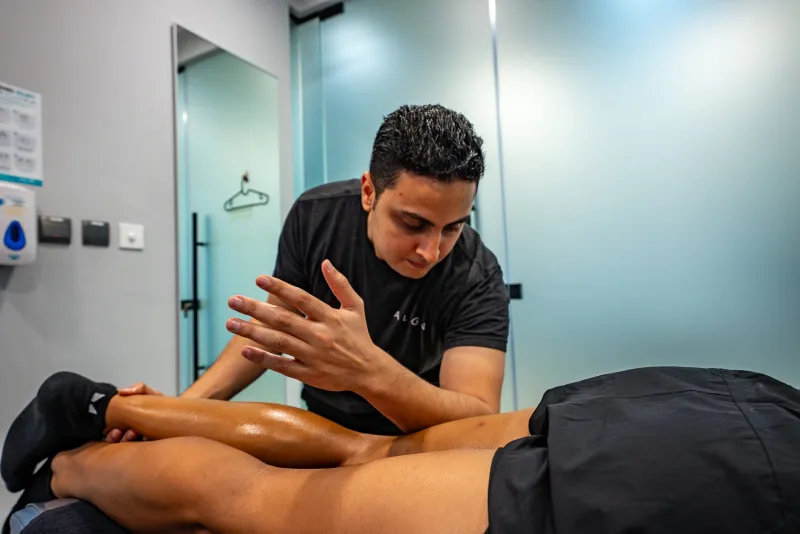
You don't need to tell a good therapist where you're lopsided. They can usually see it before you're on the table: one shoulder sitting higher, one hip slightly forward, your head tilted a few degrees off true.
During the massage, the difference between sides is often striking. The 'favourite' side typically feels denser, warmer to the touch and more tender under pressure — the tissue has been working overtime. The other side might feel looser but weaker, doing less and complaining less.
Treatment then works on two fronts: releasing the overworked side with deeper, slower work — trigger point pressure, sustained holds along the shoulder blade and neck — while encouraging the neglected side to switch on, often through gentle stretching and mobility work. The goal isn't to make you perfectly symmetrical (nobody is), but to stop one side doing two jobs.
Three Self-Checks You Can Do at Home
Between sessions, try these in front of a full-length mirror:
1. The shoulder glance. Stand relaxed, arms loose. Look at the line of your shoulders in the mirror. One side noticeably higher or rolled forward? That's your habitual side showing.
2. The bag swap. For one week, consciously carry your bag on the non-favourite shoulder. It will feel absurd. That absurdity is exactly the point — your comfortable way has been quietly training one side for years.
3. The phone check. Next time you're on a call, notice where the phone is. If it's clamped to your neck, put it on speaker or use earbuds. Small change, big cumulative difference.
What Actually Helps Long-Term
Massage is brilliant at releasing the tension that asymmetry creates — but the habits rebuild it. The winning combination is:
- Regular massage to keep the overworked side from hardening into chronic tightness. For most desk-bound or bag-carrying adults, every four to six weeks makes a genuine difference.
- Alternating habits — bag swapping, mouse switching (even one day a week), standing up differently at your desk.
- Simple strength work — rows, wall presses, or even carrying shopping in both hands evenly, to give the weaker side a job again.
Your body will always have a favourite side. That's human. The trick is making sure the favourite doesn't end up doing all the work — and knowing when to book in for a proper reset when it does.
If one shoulder has been running the show for a little too long, book a session and we'll give the other side a chance to speak up.