Hormones, Hot Flushes and Hands That Help: Massage in Midlife
Nobody Warns You About the Shoulders
Ask around any group of women in their late forties and the same odd collection of complaints keeps cropping up: a neck that's seized up for no obvious reason, knees that ache on the stairs, nights spent throwing the duvet off then pulling it back on an hour later. Perimenopause and menopause don't just bring hot flushes — they change how muscles, joints and sleep behave, often years before anyone uses the word 'menopausal'.
It's no accident that women in their forties and fifties have become the fastest-growing group of clients at wellness studios across the UK. Not because of a trend, but because this is a stage of life when the body genuinely asks for a bit more support — and massage, done properly, is one of the more pleasant ways to give it.
What's Actually Going On
As oestrogen declines, it takes a few unhelpful things with it. Oestrogen plays a role in keeping cartilage cushioned and tissues supple, so joints can feel stiffer and more temperamental. Sleep gets lighter and more easily interrupted, which means muscles recover less overnight and tension builds up on a rolling basis. And stress hormones tend to run hotter during this period, tightening shoulders, jaws and lower backs without any dramatic event to blame.
Add it together and you get a body that feels vaguely inflamed, tired and tense all at once — often described by clients as 'feeling older than I am'.
Where Massage Genuinely Helps
Massage isn't a hormone treatment, and no honest therapist will pretend otherwise. What it can do is address the physical fallout: the knotted trapezius muscles, the stiff lower back, the restless legs, the frazzled nervous system that keeps you wired at midnight.
A few approaches tend to suit hormonal symptoms particularly well:
- Aromatherapy massage — gentler pressure with oils like lavender or clary sage, useful for sleep disruption and anxiety. Many clients book evening appointments specifically to carry the calmness into bedtime.
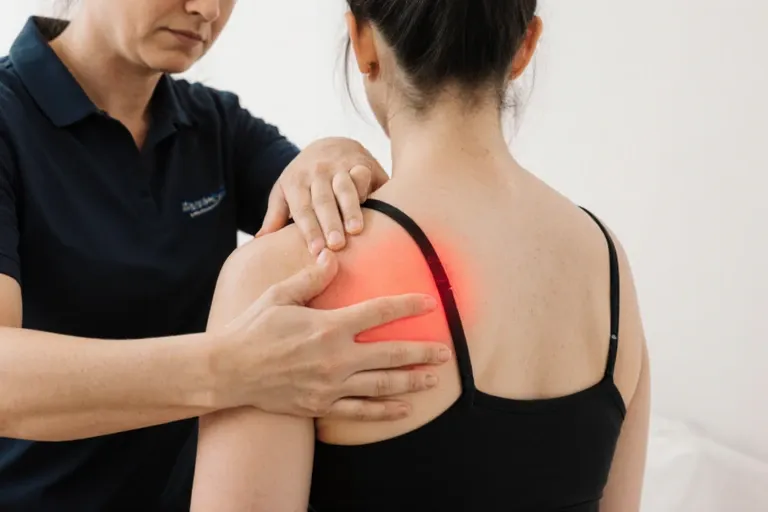
- Deep tissue work on the upper body — for the neck, shoulder and jaw tension that seems to arrive out of nowhere. This is often the complaint that gets women through the door in the first place.
- Lymphatic or lighter rhythmic techniques — helpful if fluid retention or tender, achy limbs are part of the picture.
- Regular shorter sessions rather than occasional long ones — because when symptoms fluctuate month to month, consistency beats intensity.
What to Tell Your Therapist
You don't need to give a full medical history, but a couple of honest sentences make a real difference. Worth mentioning:
- Whether you're perimenopausal, menopausal or post-menopausal — symptoms and tissue sensitivity can differ at each stage.
- Any HRT or supplements you're taking, since skin sensitivity and bruising can change.
- If you're running hot: some women prefer a cooler room, lighter blankets or skipping heated treatments like hot stone work during a flush-prone phase.
- Whether sleep is the main battle, or pain and tension — it shapes which techniques we'd prioritise.
And if you'd rather not talk at all during the treatment, that's absolutely fine too. Say it once at the start and we'll leave you to it.
Why Now?
Part of the shift is simply that the conversation has opened up. Menopause is discussed on the radio, in Parliament and at the school gates in a way it simply wasn't twenty years ago. Women are less inclined to accept 'that's just your age' as an answer — for joint pain, for sleep, for the low mood and the short temper.
There's also something to be said for an hour where nobody needs anything from you. Midlife often means caring for teenagers and ageing parents simultaneously, holding down demanding jobs, and quietly putting yourself last on the list. A massage is a rare appointment that's entirely, unapologetically yours.
A Sensible Way to Start
If you're new to massage or returning after years away, start with a 60-minute session and say so on the booking form. A good therapist will adapt pressure, temperature and pacing to how your body is that day — because during perimenopause, how your body is can genuinely change from one fortnight to the next.
Some clients book monthly; others come in waves during difficult patches. There's no wrong pattern. The point is that the aching joints and the broken sleep aren't things you simply have to put up with — and you don't have to white-knuckle through them alone.
Your body is changing. It deserves care that changes with it.