Bag on One Shoulder, Biscuit in Hand: The Parent's Posture Problem Nobody Talks About
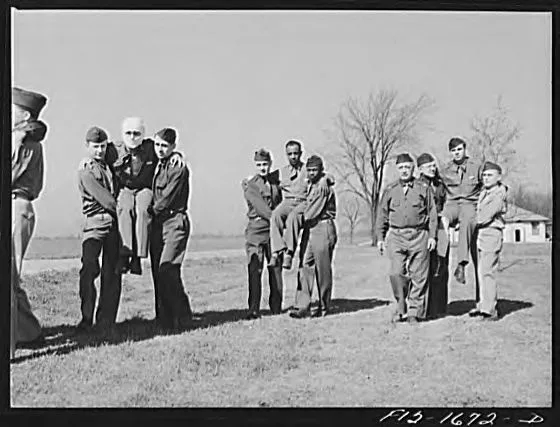
Photo: Delano, Jack, Public domain, via Wikimedia Commons
The Ten-Minute Workout You Never Signed Up For
Ask any parent and they'll tell you: the school run isn't a stroll, it's an obstacle course with a deadline. There's the PE kit that's somehow still damp, the reading book that's vanished, and the toddler who has decided shoes are optional.
What we rarely notice is that all of this is physical work. Lifting a six-year-old plus a rucksack into the car. Leaning across to clip a buckle at an awkward angle. Pushing a pram one-handed while holding a coffee and a coat. Repeated every weekday, term after term, it adds up to a very particular pattern of tension — one we see constantly at the studio.
The Signature 'Parent Slouch'
Every type of routine leaves its fingerprint on the body, and the school-run version is unmistakable:
- One shoulder sits lower than the other, usually from carrying bags, children or a car seat on the same side every single day.
- The front of the shoulders roll inward from strapping children into seats and hunching over buggies with poorly adjusted handles.
- The lower back grumbles from all that bending into the back seat rather than turning properly at the knees.
- The neck takes the strain, craning down to check a phone, a lunchbox, a shoe situation.
None of this is dramatic. That's precisely the problem. It creeps in quietly, and by half term you're rubbing your neck at the traffic lights wondering when that happened.
Where Massage Earns Its Keep
If you come in and describe your mornings, we already have a fair idea of what we'll find. The usual suspects:
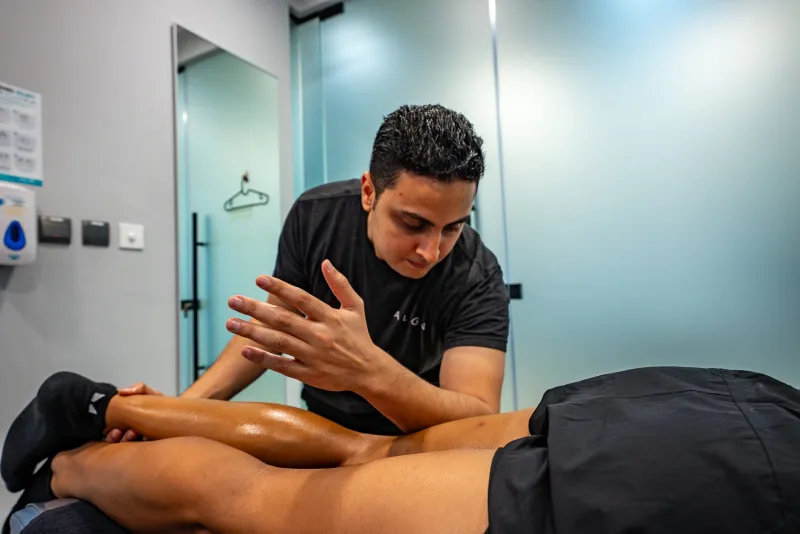
The upper trapezius and neck. The muscles between your shoulders and skull carry the bag-and-buckle load. Releasing them often brings that immediate 'shoulders finally down' feeling.
The chest and front shoulders. When everything you do leans you forward, the muscles at the front shorten and pull you into a stoop. Working here helps your body remember it can open back up.
The forearms and hands. Gripping buggy handles, car doors and tiny hands leaves its mark. A bit of attention here is surprisingly restorative — especially for anyone also typing all day.
The lower back and hips. All that twisting into the back of the car creates rotational tension that a targeted session can genuinely shift.
A regular appointment — even every four to six weeks during term time — stops the pattern from hardening into something that complains all day.
Two-Minute Resets for the Morning Chaos
You won't always have time for a full stretch routine between the toast and the bell. These fit into the gaps you already have:
While the kettle boils: interlace your fingers behind your back, draw your shoulders back and down, and lift your chest. Hold for three slow breaths. It directly undoes the buckle-and-buggy hunch.
At the school gate: once the bags are handed over, roll your shoulders backwards five times and gently tilt each ear towards its shoulder. Nobody's watching, and if they are, they're probably jealous.
In the car (parked, obviously): sit tall, turn your torso to hold the headrest behind you, and breathe. Both sides. It counteracts all that forward reaching.
At bedtime: swap sides. If you always carry the bag or the child on the right, put them on the left tomorrow. It feels strange for a week; your spine will thank you for a month.
Book the Slot Before Term Swallows You
Parents are, in our experience, the worst at booking anything for themselves — there's always a parents' evening or a costume to source. But the body doing the school run every day is the same one keeping the household running, and it deserves maintenance like anything else that works that hard.
Find a slot that suits — many parents favour mid-morning once the house is finally quiet, or an evening session once bedtime is done. Whichever you choose, treat it like a dentist appointment: non-negotiable, and quietly life-improving.
The school run might be ten minutes of chaos, but it doesn't have to be ten minutes your body pays for all day.